
Silviculture Surveys
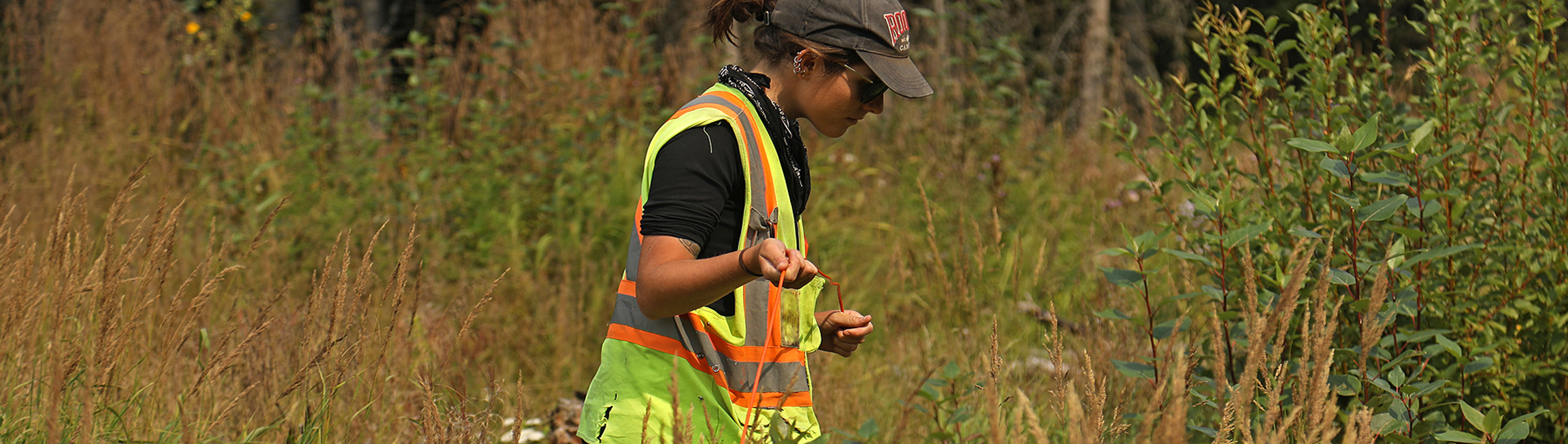
When foresters are trying to understand characteristics such as the success of a plantation, the amount of species diversity, the density of various species, growth patterns, etc., it is not practical to do a complete inventory by counting and measuring every single plant and tree on a block. Instead, statistical samples are taken to give a reasonable estimate of the information being sought. This practice is called surveying. Silviculture surveys should be distinguished from land surveying, which is another field of work that involves measuring property boundaries and a very large number of other related practices.
Timber Cruising is traditionally looked upon as a logging activity, although technically, it is a type of silviculture survey. Timber cruising involves the study of representative samples of a stand of mature timber, to study the quality, heights, diameters, ages, and species diversity. Other external factors also need to be taken into account, such as the access to the area, potential erosion or vegetation management issues, susceptible bird nests and animal lairs, etc. At the end of the assessment, the person doing the timber cruising is able to come up with an assessment of the approximate value of the stand, which can then be useful for activities such as determining real estate transaction prices, fibre sales, and so on. Timber cruising is also useful because it is a great way for foresters to determine the overall health of the forest, and to become better acquainted with the characteristics of a particular stand of trees.
Regen Delay Surveys are used in certain provinces to determine whether or not a harvested area has met its mandated early regeneration requirements. There is usually a specific deadline for a Regen Delay survey, which could be, for example, four years from the date of harvest. By this date, surveyors must assess the success of natural regen combined with planted trees (if any) to determine if the stand meets a passing grade. Regen delays are performed on young plantations, so it is common that the trees being surveyed are quite small. Obviously, these surveys must be done when there is no snow cover, and it is often easier to do them in the early spring, before green-up, or perhaps in the late fall after the leaves drop off the brush. Of course, there is a small advantage to having leaves ON the brush, because it may help the surveyor to identify certain species a bit more easily.
Stocking Surveys are performed fairly frequently, to simply assess the density of viable crop trees on a plantation. This may be more of an "unofficial" survey than other types of survey, but it is useful because it might be performed several times on a single plantation over a period of years, giving foresters an idea of the health and growth rates of the young stand.
Free-To-Grow Surveys are used in certain provinces to determine whether or not a harvested area has met its mandated reforestation requirements. The primary difference between a Regen Delay survey and a Free-To-Grow survey is that if a block or stand has passed the FTG survey, then the logging company becomes legally exempt from any further requirements to bring the land back to productive forest. Free-To-Grow surveys occur much later in the development of the young stand, perhaps twelve to fourteen years after initial harvest. Snow cover again is an issue that restricts the ability to perform a FTG survey, although it is a much lesser concern than for a Regen Delay survey, unless the snow starts to get fairly deep. Because Free-To-Grow surveys are sometimes affected by broad-leaf vegetation that is competing with trees in the stand, it is sometimes necessary to perform these surveys at times of the year when there are a lot of leaves on the brush, to properly assess competition from vegetation.
The above are just a few of the many types of surveys that are performed by Silviculturalists. There are many types of surveys relating to volume of fibre present in an area. Obviously, most survey activities take place in seasons other than winter, but there are other types of work/surveys, such as Pine Beetle Probing (looking for evidence of Mountain Pine Beetle infections) that can take place during the winter months, due to the fact that the stems of mature trees can be examined at heights above the level of snow cover. Doing survey work has an advantage in that there is a much longer employment season than for activities such as tree planting.