
Pruning
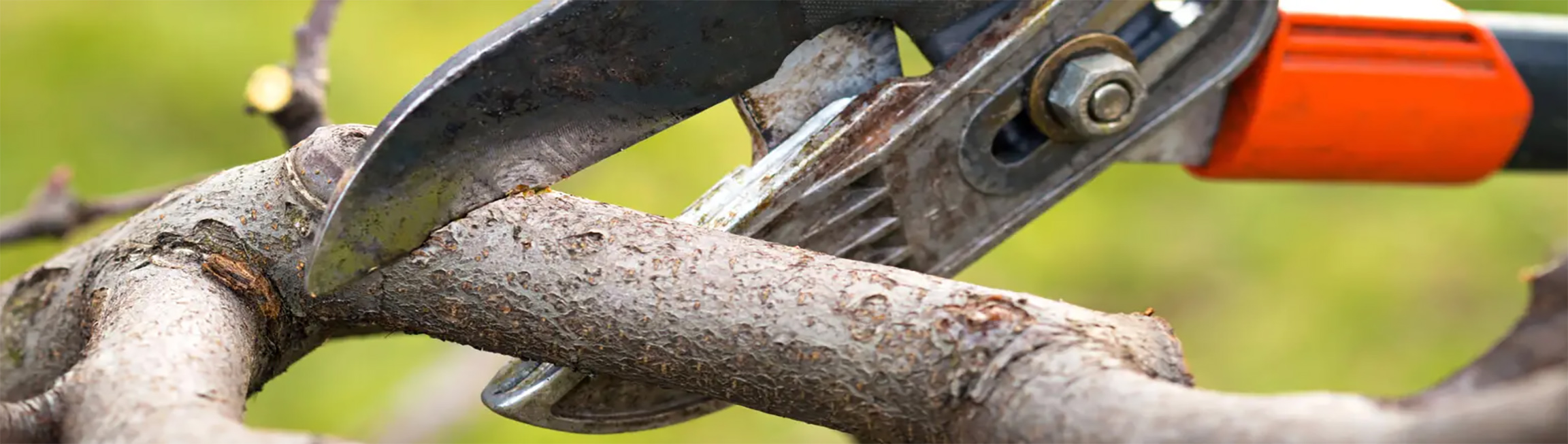
In general, pruning is a horticultural and silvicultural practice involving the selective removal of parts of a plant, such as branches, buds, or even roots. In the field of silviculture, the typical goal of pruning programs is to force trees into channeling their energy into vertical growth, so the fibre being produced by the tree goes into the height and diameter of the stem, rather than into low-lying branches. Pruning can also be a value-added service, minimizing the prevalance of knots in the lumber that will eventually be harvested from the tree.
Workers will use pruning shears or saws (mechanical or hand-saws) to perform pruning work. Axes and machetes, and any tool that involves impact to the stem, are not effective tools. This is because they cause too much damage and scarring, and do not create a clean cut. A rough cut enhances the chance that undesirable fungi or other organisms will infect the tree. Chain saws are also undesirable, because they are too rough and lead to scarring.
Pruning should not be done during the spring, when bark is loose, as the risk of damage to the stem is greater. The late fall is a good time for pruning, for a variety of factors such as lower risk of infection by biological organisms. The winter is also an excellent time for pruning, when growth is minimal because the tree is dormant. There is also one other major benefit to winter pruning programs: they can provide employment for silvicultural employees at times of the year when other silvicultural activities (such as tree planting) are simply not possible due to snow.
Pruning is also done to control blister rust in white pine. Lower branches are removed and infected bark is excised to prevent the spread of the rust. Here's a good reference link for blister rust:
www.plantmanagementnetwork.org/pub/php/management/whitepine