
Brushing
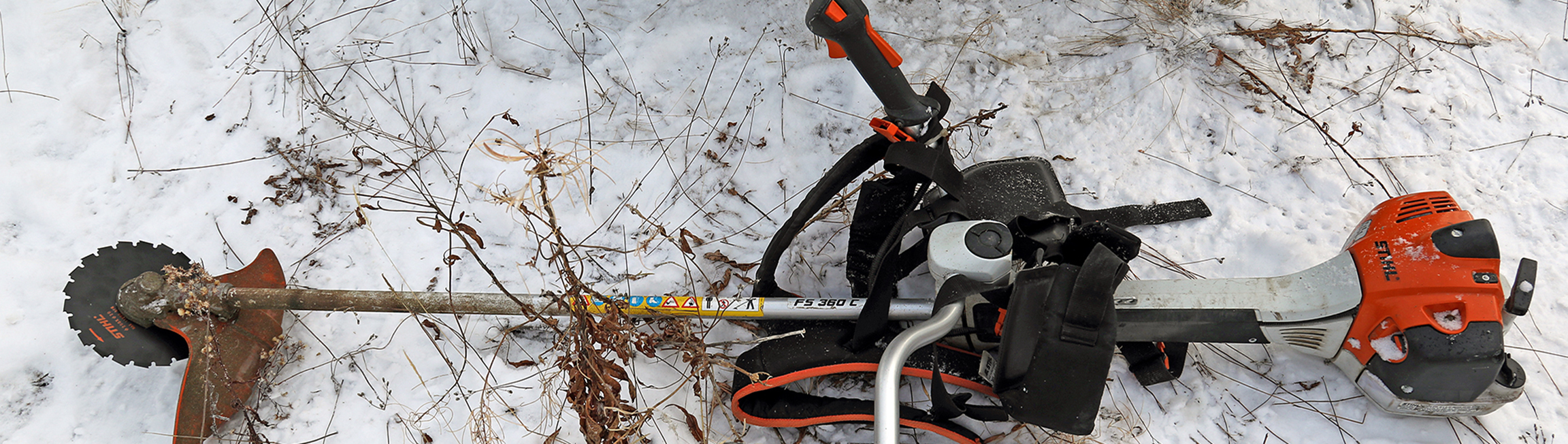
Brushing is an activity which typically takes place a couple years after an area is planted, or a couple years after natural regeneration starts to take hold. At this point in the growth of a stand, the young trees often fight with other plants and brush for critical resources such as water, sunlight, and nutrients. Brushing can also take place immediately after planting on high-growth sites. In some cases, tree planters are required to mark all young cedar seedlings with hi-visibility flagging ribbon so the brushers can work more effectively. Brushing is a way to reduce or eliminate competition for the young trees, as they grow at a far slower rate than many of their competitors.
Brushing is almost always done with a special type of mechnical saw. A brush saw is designed to be able to be used very much like a whipper-snipper for residential grass control, and it is much more effective and safer than a chain saw for eliminating competition from small and light plant growth. A brush saw is also much safer than a chain saw, although it is not usually as effective on woody competition once stems start to get more than a few inches in diameter. However, on a brushing contract, the saw is usually being used to eliminate competition from light brush and vegatation (and to a lesser extent upon competing trees).
Before a successful brushing application, you might look at a young stand and not really be able to see any viable crop trees because of the amount of brush and vegetation. However, after brushing, you will probably suddenly be able to see large numbers of young crop trees, perhaps a few feet each in height. Without all the competition from vegetation, the growth rates of these crop trees will certainly be enhanced.
Here is a good reference link from BC's Ministry of Forests:
www.for.gov.bc.ca/hfp/publications/00183